 Canada
 United States
Buying guide
How Much Does It Cost to Run a Pond Aerator? Electric vs Solar vs Windmill Lifetime Cost
The true cost of a pond aerator is upfront price plus running cost plus maintenance. Here is how electric, solar, and windmill compare over the life of the system.
Last updated August 31, 2026
A pond aerator's cost has three parts: upfront price, running cost, and maintenance. Electric aerators draw modest continuous power; solar and windmill aerators carry no power bill but need battery or diaphragm upkeep over time. To compare fairly, add all three over the system's life rather than judging by the sticker price alone.
The short answer: judge lifetime cost, not the price tag
The question sounds simple, but the honest answer is that a pond aerator has three cost buckets, not one: the upfront price of the system, the running cost to keep it going, and the maintenance it needs over the years. A cheaper unit that draws more power, or a bargain solar kit that needs a new battery every few seasons, can quietly cost more than a well-built system that runs for a decade. So before you compare a windmill to a solar unit to an electric compressor, add up all three over the working life of the equipment.
The good news for rural and off-grid owners: two of the three power sources have no monthly power bill at all. A windmill aerator runs on wind and a solar aeration system runs on sunlight, so neither adds a line to your hydro bill. An electric aeration system does draw power, but a bottom-diffuser compressor is a modest, steady load rather than a heater-sized one. The trade-offs live in reliability and maintenance, which is exactly what this guide breaks down.
The cheapest aerator to buy and the cheapest aerator to own over ten years are often not the same machine.
The three cost buckets, explained
1. Upfront cost
This is the purchase price of the compressor or windmill head, the tower or cabinet, the airline, the diffuser, and any panels or batteries for a solar setup. Electric systems are usually the least expensive to buy because they are the simplest hardware. Solar systems cost more upfront because you are also paying for panels and, ideally, a battery. Windmills sit in the middle to upper range because you are buying a durable, tower-mounted machine built to run unattended for years.
2. Running cost
This is what it costs to keep the aerator moving air, month after month. For electric, that is the electricity the compressor draws. For solar and windmill, the running cost is effectively zero: the sun and the wind are free. This is the bucket most people mean when they ask what an aerator costs to run, and it is where off-grid power sources shine.
3. Maintenance cost
Every aeration system needs some upkeep. Diaphragm compressors (used in electric and windmill units) have rebuild kits and diaphragms that wear over time. Solar systems add batteries, which are consumable and will eventually need replacing. Diffuser membranes and airlines are shared wear items across all three. Maintenance is the bucket buyers most often forget, and it is where a low sticker price can turn into a higher lifetime cost.
Electric running cost: how to estimate it yourself
Electric aeration is the reliability benchmark because it runs continuously regardless of wind or sun. A bottom-diffuser compressor is a modest continuous load, not a big-appliance draw, but it does run around the clock during the open-water season, so a small wattage adds up over a month. Rather than quote a single monthly figure (yours depends on your unit and your local rate), here is how to calculate it for your own situation:
- Find the compressor's wattage on its rating plate or spec sheet.
- Divide watts by 1,000 to get kilowatts (for example, 100 watts = 0.1 kW).
- Multiply by hours run per day (24 for continuous), then by days in the month, to get kilowatt-hours (kWh).
- Multiply kWh by your electricity rate (check your bill for the price per kWh) to get your monthly cost.
That simple formula lets you compare any two electric units honestly, and it shows why a slightly more efficient compressor can pay for itself over a season. If you are not sure which compressor size your pond needs (undersizing wastes the investment, oversizing wastes power), our pond experts will size it for you for free.
Solar running cost: no power bill, but budget for batteries
A solar aeration system has no running cost in the electricity sense: it makes its own power. Over years, that can add up to real savings versus an electric unit, especially where a power line would have to be trenched to the pond in the first place. But solar is not free forever. The honest cost is the battery. If you want your solar aerator to keep working after dark (which matters enormously for fish, because ponds hit their oxygen low in the pre-dawn hours), you need battery backup, and batteries are a consumable that will need replacing at some point in the system's life.
That is the one caveat worth stating plainly: a direct-drive solar unit that runs only while the sun is up will stop overnight, and a stopped aerator saves you nothing if it costs you fish. We cover the full trade-off in our guide to battery-backup versus direct-drive solar aerators. For lifetime cost, count the battery as a scheduled replacement, the way you would count tires on a truck, and solar still comes out very competitive.
Windmill running cost: no power bill, minimal moving parts
A windmill aerator has the lowest running cost of all: none. It draws no electricity and needs no power line, which is why it has been the off-grid workhorse for prairie dugouts and remote ponds for decades. Koenders has been building windmill aerators since 1988, and the appeal is the same today: bottom-up diffused air, driven by the wind, with nothing to plug in.
The maintenance is honest and modest: the diaphragms in the compressor head wear over time and are replaced with a rebuild kit, and bearings and the diffuser get periodic attention. There is no battery to replace, which keeps the long-term cost low. The one thing a windmill cannot do is make air on a dead-calm day: in a windless cold snap it gives little to no air, so if your pond must never lose oxygen, many owners pair a windmill with an electric failover. That hybrid setup costs a bit more upfront but closes the calm-wind gap.
Lifetime-cost comparison at a glance
| Power source | Running cost | Maintenance over time | Weather-independent? | Best fit |
|---|---|---|---|---|
| Electric | Modest continuous power bill | Diaphragm / rebuild kit, diffuser, airline | Yes, runs 24/7 regardless of wind or sun | Ponds with shoreline power that must never lose oxygen |
| Solar (battery backup) | No power bill | Battery replacement, diaphragm, diffuser | Partly, battery covers overnight and cloudy gaps | Off-grid ponds where trenching power is costly |
| Windmill | No power bill | Diaphragm / rebuild kit, bearings, diffuser | No, little to no air in dead-calm wind | Off-grid ponds and dugouts with reasonable wind |
The pattern is clear: electric wins on reliability, windmill and solar win on running cost, and the smart lifetime buyer weighs the maintenance bucket instead of stopping at the sticker price. For a fuller head-to-head on reliability and fit (not just cost), see our pillar guide, windmill vs solar vs electric pond aeration.
The bigger lifetime saving: aeration vs chronic chemical dosing
There is a second, larger cost comparison that most aerator buyers never make, and it is the one that changes the math entirely. If your real goal is a clean pond (less algae, less muck, less odor), then aeration is not competing only against other aerators. It is competing against the treadmill of repeated chemical dosing.
Copper sulfate and similar algaecides kill algae fast, but the dead algae then sinks, rots on the bottom, and releases the very nutrients that feed the next bloom. So you dose again. And again. Each application is a recurring cost with no end date, and the underlying problem (excess nutrients plus low oxygen plus anaerobic bottom sediment) never gets solved. Aeration works the opposite way: it raises dissolved oxygen, mixes the water column, and lets aerobic bacteria break organics down instead of letting them pile up.
| Approach | How you pay | What it does to the root cause |
|---|---|---|
| Aeration + beneficial bacteria | One durable system plus modest upkeep | Raises oxygen and treats the sediment that drives blooms |
| Chronic algaecide dosing | Repeated purchases, season after season | Kills algae that sinks, rots, and refuels the next bloom |
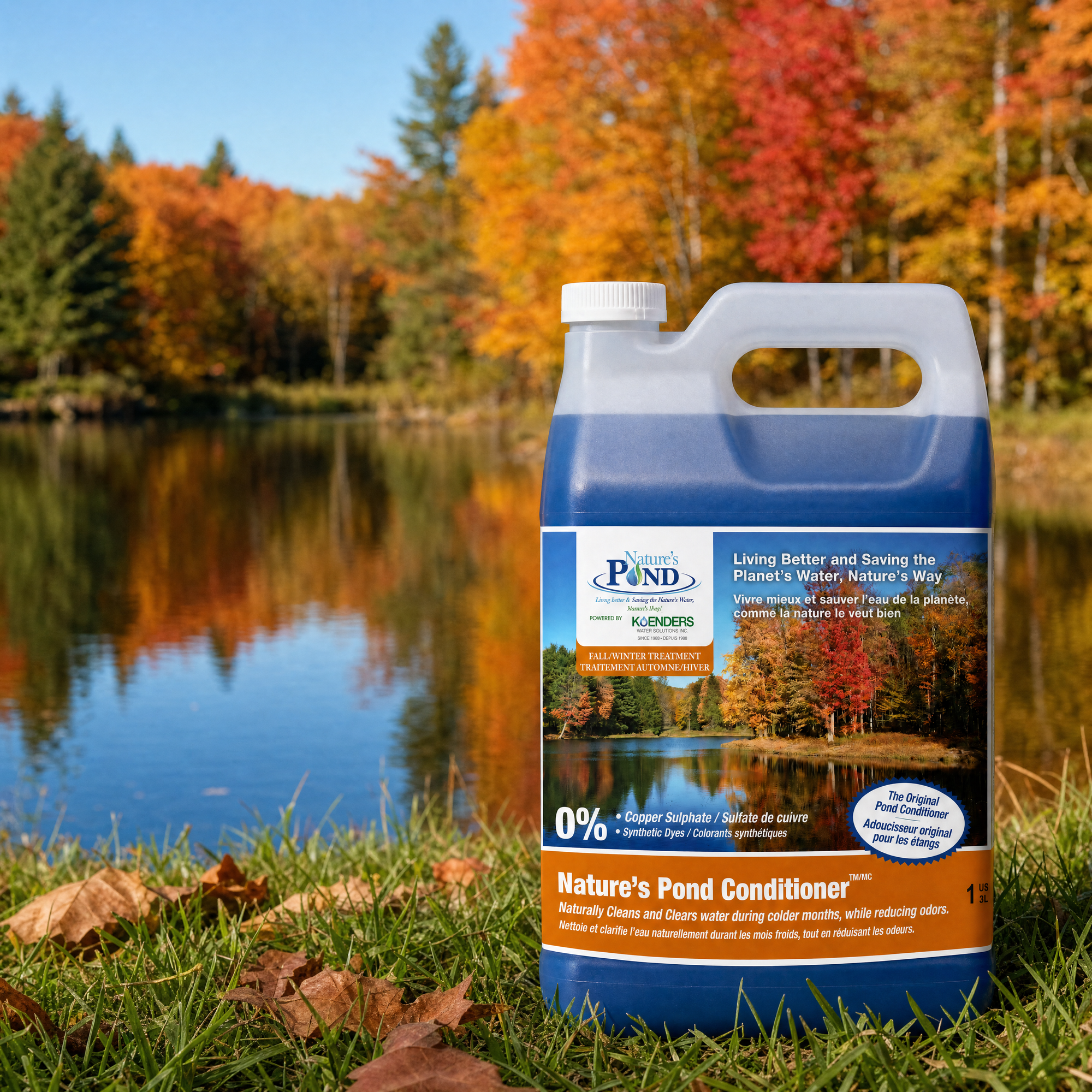
That is why the durable, lower-lifetime-cost path is aeration plus biology rather than a chemistry cabinet you refill forever. Pairing your aerator with Nature's Pond Conditioner, an all-natural blend of aerobic and anaerobic beneficial bacteria, enzymes, and plant extracts, tackles the nutrients and bottom muck the aerator alone cannot digest fast enough. It converts organics to carbon dioxide and water, is non-pathogenic, and is safe for fish, pets, livestock, and wildlife when used as directed. Aeration and conditioning together are the heart of the 3-step Pond Care Program: Renew, Revive, Remove.
How sizing changes the cost
Sizing is the hidden lever on all three cost buckets. An undersized system runs constantly and still cannot keep the pond healthy, which wastes the whole investment. An oversized electric compressor draws more power than you need every hour of every day, inflating the running-cost bucket for no benefit. And any bottom diffuser switched on full-blast in a stratified pond can force a sudden turnover and an oxygen crash, so always start a new system slowly and let it ramp up over days.
Getting the size right the first time is the single best way to control lifetime cost, and it depends on your surface acres, depth, and shape. Rather than guess, ask our in-house pond experts for a free sizing estimate. We will recommend the right power source and compressor for your pond and your budget, so you are not paying for watts or maintenance you do not need. Dealers and installers can also explore our dealer and partner programs.
So which is the cheapest aerator to run?
On running cost alone, windmill and solar tie for cheapest because neither has a power bill. Windmill edges ahead on lifetime maintenance because it has no battery to replace, as long as your site has reasonable wind. Solar is the strongest choice where there is no power line and wind is unreliable, provided you budget for the battery that keeps it running overnight. Electric costs the most to run month to month, but it is the most reliable and the least expensive to buy, which makes it the right call where shoreline power already exists and continuous oxygen is non-negotiable.
The one comparison that beats all three, though, is aeration versus doing nothing (or versus dosing chemicals forever). A correctly sized system that raises oxygen and supports beneficial bacteria pays for itself in a pond you actually enjoy, and in fish that survive the seasons. That is the lifetime return worth measuring.
Related
- Windmill vs solar vs electric aeration The full head-to-head buyer's guide
- Solar aerator: battery vs direct-drive Why overnight backup matters for fish
- Pond de-icer vs aerator The cheaper winter tool for your fish
- Electric aeration systems Reliable, continuous, weather-independent
- Windmill aeration Off-grid air with no power bill
- Talk to a pond expert Free sizing and system recommendation
FAQ