 Canada
 United States
Sector guide
Livestock Pond Water Quality and Irrigation Pond Management Guide
Learn how farmers and ranchers can protect livestock pond water quality, improve irrigation reliability, and manage algae, odour, sediment, and nutrient pressure with practical source control and aeration.
Last updated August 8, 2026
A farm pond or dugout is working infrastructure. It may supply cattle, support irrigation, hold runoff, or serve several purposes at once. When its water quality declines, the effects can spread through the operation as plugged screens, uneven irrigation, unpleasant odour, heavy organic sediment, poor livestock acceptance, and more time spent maintaining pumps and troughs. Good management begins by treating the pond as a connected system, not simply as a hole that holds water.
Livestock pond water quality is shaped by the watershed, pond design, animal access, weather, water depth, circulation, and the amount of organic material entering the water. Aeration can be a valuable part of the solution, but it works best alongside runoff control, responsible livestock access, routine inspection, and maintenance of water delivery equipment.
Why farm pond water quality matters
Water that looks clear is not automatically suitable for every use, and water that looks green is not necessarily understood by appearance alone. Livestock and irrigation systems have different sensitivities, so management decisions should reflect the pond's intended uses. A practical plan considers water chemistry, suspended material, algae, organic loading, seasonal changes, and potential contaminants from the surrounding land.
For livestock operations
Reliable access to acceptable water supports normal drinking behaviour and sound herd management. Livestock may reduce intake when water has objectionable taste or odour, excessive algae, heavy sediment, or contamination. Some water quality hazards cannot be identified by sight or smell, including elevated dissolved minerals or certain microbial and chemical contaminants. For that reason, aeration and visual inspection should never replace appropriate laboratory testing or veterinary guidance.
For crop irrigation
Irrigation pond quality affects both equipment and soil management. Filamentous algae, floating debris, and suspended solids can clog intakes, filters, emitters, and nozzles. Dissolved salts and the balance of sodium relative to calcium and magnesium can influence soil structure and crop performance. Water alkalinity, pH, and specific ions can also matter, depending on crop, soil, and irrigation method. Aeration may improve circulation and reduce some organic water quality problems, but it does not remove dissolved salts or make unsuitable irrigation water suitable.
Common causes of poor livestock pond and irrigation pond water
- Nutrient-rich runoff carrying manure, fertilizer, soil, or decaying vegetation into the pond.
- Direct livestock access that disturbs banks, resuspends sediment, and adds manure and urine.
- Shallow, warm water that encourages rapid plant and algae growth.
- Accumulated leaves, crop residue, dead algae, and other organic matter that consume oxygen as they decompose.
- Limited circulation that allows temperature and oxygen layers to develop.
- Eroding shorelines or exposed soil that increase turbidity and reduce useful depth.
- Pump placement that draws bottom sediment or floating material into irrigation equipment.
These factors often reinforce one another. Nutrients stimulate growth. That growth eventually dies and settles. Decomposition consumes oxygen, while the resulting organic muck makes the pond shallower and more nutrient-rich. A successful plan interrupts this cycle at several points rather than relying on one product or one seasonal treatment.
How aeration helps a farm pond or dugout
Aeration introduces oxygen and promotes water movement. In a typical bottom-diffused system, air travels through weighted tubing to diffusers near the pond bottom. Rising bubbles lift surrounding water, creating circulation between deeper and surface zones. Surface aerators move and expose water at the air-water interface. The right approach depends on depth, shape, seasonal use, available power, and management goals.
Improved circulation can reduce stagnant zones and help distribute dissolved oxygen through more of the water column. Better oxygen availability supports naturally occurring aerobic microorganisms that break down organic matter. Over time, this can contribute to less organic muck and fewer objectionable odours when nutrient inputs are also controlled. Aeration can also make conditions less favourable for certain nuisance algae, but it is not a guaranteed algae cure and will not prevent blooms when nutrient loading remains high.
Aeration treats the pond's oxygen and circulation problem. It does not cancel what enters from the watershed.
What aeration cannot do
- It does not remove dissolved salts, pesticides, heavy metals, or every disease-causing organism.
- It does not make untested water safe for livestock or a sensitive crop.
- It cannot compensate indefinitely for unrestricted manure, fertilizer, or sediment inputs.
- It may not eliminate established weeds or an active harmful algal bloom.
- It does not replace filtration where irrigation emitters require low suspended solids.
A practical management plan for cleaner farm pond water
1. Define the water uses and risks
List every use, including livestock watering, irrigation, fire protection, recreation, and habitat. Note whether animals drink directly or through an off-site trough, which crops and irrigation equipment are involved, and when demand is highest. Multiple uses can require different sampling and treatment decisions. If the pond receives runoff from manure storage, chemical handling areas, roads, or neighbouring land, include those sources in the assessment.
2. Test water for its intended purpose
Use an accredited laboratory and request a panel suited to livestock water, irrigation water, or both. Discuss the results with an agronomist, veterinarian, extension specialist, or other qualified local adviser. Sampling is especially useful before peak use, after unusual runoff or flooding, when appearance or odour changes, and when livestock behaviour, crop response, or equipment performance raises concern. Collect samples according to laboratory instructions so the result represents the source accurately.
3. Reduce nutrients and sediment at the source
Maintain vegetated buffer areas where practical, stabilize eroding banks, and divert clean water away from contaminated areas before it reaches the pond. Follow nutrient management plans and avoid applying fertilizer or manure where runoff can carry it directly into the water. Manage drainage without creating downstream problems. Local regulations and site conditions should guide any earthworks, shoreline changes, or runoff diversion.
4. Limit direct livestock access
Where feasible, fence the pond and pump water to a trough. This protects banks, reduces sediment disturbance, and limits direct manure loading. A defined, stabilized access point is preferable when direct access cannot be avoided. Keep troughs clean, inspect floats and valves, and protect pump intakes from debris. The water delivery system matters as much as the source because neglected troughs can develop their own algae and sediment problems.
5. Size and position aeration correctly
Aerator selection should account for pond surface area, maximum and average depth, shape, volume, diffuser placement, elevation, tubing distance, seasonal conditions, and electrical or wind resources. Acreage alone is not enough. Islands, coves, irregular basins, and shallow shelves can create isolated areas that require special placement. KOENDERS WATER SOLUTIONS offers sizing support for farm and ranch applications, including windmill and electric options where appropriate.
Start a new bottom-diffused system gradually, particularly in a pond that has been stagnant or strongly stratified. Rapid circulation can move low-oxygen bottom water and accumulated gases upward too quickly. Follow the equipment supplier's startup procedure and seek specialist advice when fish, unusual odour, or severe water quality conditions are present. Keep diffusers above very soft sediment so they circulate water without unnecessarily disturbing the bottom.
6. Manage algae and organic matter cautiously
Identify the growth before acting. Filamentous algae, duckweed, rooted plants, suspended algae, and cyanobacteria require different responses. Do not handle or allow livestock access to suspicious surface scums. Contact the appropriate local authority or qualified professional for sampling and guidance. Killing a large amount of growth at once can increase oxygen demand as it decomposes, so any permitted treatment should follow its label and account for livestock, irrigation, fish, and downstream use restrictions.
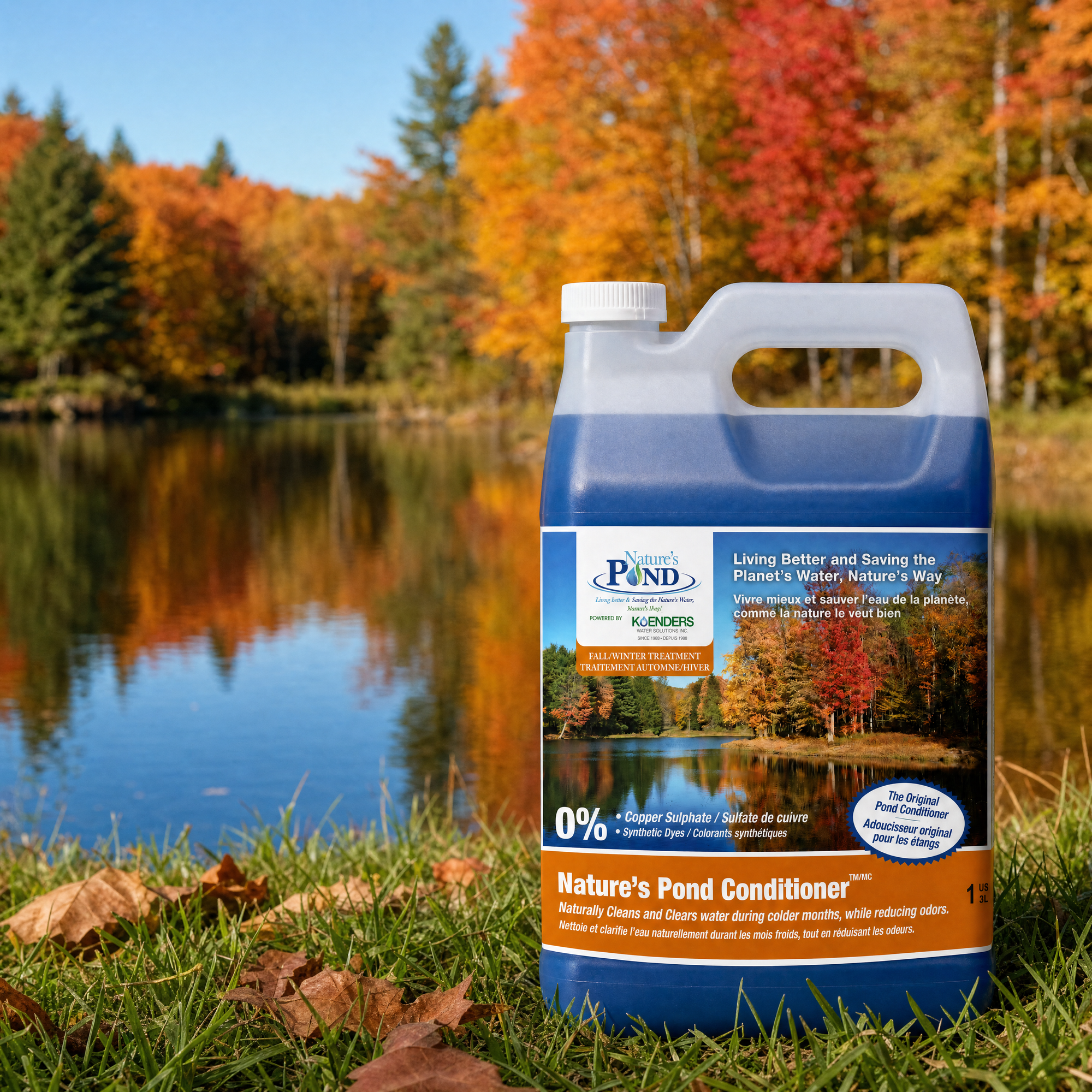
Beneficial-bacteria products can support the natural breakdown of organic material when water temperature, oxygen, and application conditions are suitable. They may help improve clarity and reduce nutrient availability, muck, and odour over time. They are not disinfectants, do not neutralize chemical contamination, and cannot overcome continuous heavy loading. Use a product labelled for the intended setting and dose it according to actual pond volume.
7. Protect irrigation equipment
Place the intake away from floating scum and loose bottom sediment. A screened, suspended, or floating intake may draw cleaner water than an intake resting on the bottom, depending on pond conditions. Match filtration to nozzle or emitter requirements, inspect pressure changes, and flush lines according to the system manufacturer's guidance. Aeration can reduce stagnation and organic accumulation, but appropriate screening and filtration remain essential.
Seasonal inspection and monitoring
A short, consistent inspection often catches trouble before it interrupts watering or irrigation. Walk the shoreline and check water appearance, odour, bank erosion, animal access points, inflows, screens, tubing, diffusers, compressors, windmills, and troughs. Record observations and photographs from the same locations so gradual changes are easier to see.
- New surface scum, paint-like streaks, unusual colour, or sudden plant growth.
- Changes in livestock drinking behaviour or avoidance of the source.
- Reduced pump flow, rising filter pressure, plugged emitters, or debris at the intake.
- Strong rotten-egg or sewage-like odour, especially after turnover or severe weather.
- Exposed banks, new erosion channels, or runoff carrying sediment and nutrients.
- Aeration output, airflow, unusual equipment noise, and damage to lines or fittings.
Stop using the pond for livestock or irrigation when there is a suspected harmful algal bloom, chemical spill, major contamination event, unexplained livestock illness, or a result that exceeds locally applicable guidance. Keep animals away, prevent exposure, and contact a veterinarian, laboratory, environmental authority, or agronomic adviser as appropriate. Do not assume aeration will resolve an acute hazard.
Choosing a farm pond aeration system
The best system is one that provides useful circulation reliably under site conditions and can be maintained by the operation. Electric aeration can provide consistent output where dependable power is available. Wind-powered aeration can suit remote locations and reduce dependence on grid electricity, although output varies with wind conditions. Some sites benefit from a system designed around seasonal priorities or complementary power options.
Before purchasing, prepare a simple pond profile with dimensions, depths, intended uses, water-level variation, power availability, distance from shore equipment to diffusers, and known water quality concerns. A properly sized design is more useful than choosing equipment solely by advertised pond acreage. Plan for accessible maintenance, protected air lines, replacement parts, and winter operating conditions relevant to your region.
The bottom line
Better livestock pond water quality and irrigation pond performance come from layered management. Test for the intended use, reduce incoming nutrients and sediment, protect shorelines, manage livestock access, maintain delivery equipment, and add correctly sized aeration where circulation and oxygen are limiting. This approach gives aeration the conditions it needs to work and helps protect the value of the pond as long-term farm infrastructure.
Related
- Farm and ranch water solutions Explore aeration and water-management options designed for agricultural ponds and dugouts.
- Pond aerator calculator Use pond dimensions and site details to begin estimating an appropriate aeration setup.
- Pond dosing calculator Estimate pond volume and product dosing based on the actual dimensions of your water body.
- Pond care program Build a practical routine for aeration, beneficial bacteria, inspection, and seasonal pond care.
- Contact KOENDERS Discuss pond dimensions, farm water goals, power availability, and system sizing with our team.
FAQ