 Canada
 United States
Aeration guide
Farm Dugout Aeration: Seasonal Water Quality Guide
Learn why farm dugouts stratify, what seasonal turnover means for water quality, and how properly designed dugout aeration supports cleaner water for livestock and irrigation.
Last updated August 8, 2026
A farm dugout is more than stored water. It may support livestock, irrigation, firefighting capacity, shelterbelt establishment, and day-to-day resilience through dry periods. That makes water quality a management issue, not simply an appearance issue. Dugout aeration is one of the most practical tools for improving the conditions that influence clarity, odour, bottom sediment, and dissolved oxygen through the year.
The key is to understand what aeration can and cannot do. A properly selected system circulates water and transfers oxygen from the atmosphere into the water column. It can reduce prolonged stagnant conditions, support aerobic biological processes, and help prevent the low-oxygen conditions that often develop near the bottom. It does not replace source-water protection, sensible stocking, nutrient management, testing, or treatment decisions when a specific contaminant is present.
Why farm dugouts stratify
Stratification occurs when a dugout separates into layers of different temperature and density. It is most common during warm, calm weather, especially in deeper water with limited wind exposure. Sun-warmed surface water becomes lighter and remains near the top. Cooler, denser water settles below. Between them is a transition zone that limits mixing.
This layering matters because the lower zone receives little sunlight and may receive little fresh oxygen from the surface. Organic material, including dead algae, plant debris, manure-contaminated runoff, feed waste, and soil organic matter, settles and decomposes there. As microorganisms break it down, they use available oxygen. Without enough mixing or oxygen transfer, the bottom can become oxygen-poor or oxygen-free.
- A deeper basin with a defined bottom zone
- Warm summer temperatures and extended calm periods
- Shelter from wind created by terrain, trees, or built structures
- High nutrient or organic loading that increases decomposition demand
- Dense algae or aquatic plant growth
- Limited circulation from natural wind or mechanical aeration
A clear-looking surface does not confirm that the entire dugout is healthy. The top layer can appear acceptable while lower water has low dissolved oxygen, accumulating gases, and decomposing sediment. That is why seasonal management should focus on the whole water column, not just what is visible from shore.
What dugout turnover is, and why it can change water quality quickly
Turnover is the mixing of previously separated water layers. In many dugouts, it is most likely in spring and fall as surface temperatures change and wind helps blend the water column. Turnover is a normal physical event, but it can make a water-quality issue suddenly noticeable.
When low-oxygen bottom water mixes upward, it can bring fine sediment, nutrients, and reduced compounds into the upper layer. Water may become temporarily cloudy or develop an earthy, sulphur-like, or stagnant odour. Nutrients released from bottom sediments can also contribute to conditions that favour algae when light and temperature are suitable.
The goal is not to stop all seasonal mixing. Instead, manage the dugout so it has fewer severely depleted bottom-water conditions to begin with. Continuous or well-managed aeration can support more stable oxygen conditions and reduce the sharp contrast between surface and bottom layers. The result is often a more resilient system, although the outcome depends on depth, loading, weather, water chemistry, and system design.
How dugout aeration supports cleaner water
Bottom-diffused aeration is commonly used for farm dugouts because it moves water from depth toward the surface. An onshore compressor sends air through weighted airline to diffuser stations placed near the basin bottom. Rising bubbles create an upward plume that entrains surrounding water, bringing deeper water upward and encouraging circulation across the dugout.
Improves oxygen conditions where they are often weakest
By circulating deeper water, aeration helps expose it to atmospheric oxygen at the surface and can improve oxygen distribution over time. Better oxygen conditions support aerobic microbes that process organic matter. This can help reduce the conditions associated with persistent bottom odours and soft organic accumulation.
Supports nutrient and sediment management
Aeration is not a nutrient removal system on its own. However, maintaining more oxygenated conditions can support biological processes that use available nutrients and can reduce the prolonged stagnant conditions that contribute to internal nutrient cycling. Pairing aeration with runoff control, vegetated buffers, controlled livestock access, and appropriate beneficial-bacteria products can form a more complete long-term care plan.
Helps limit stagnant-water symptoms
Stagnant water is often linked with surface scums, inconsistent clarity, odours, and heavy sediment decomposition. Aeration improves circulation, which may make the environment less favourable for these symptoms. It should be viewed as ongoing water-body management rather than an instant correction for a severe bloom, contamination event, or an undersized dugout.
Seasonal dugout aeration: a practical operating guide
Spring: start carefully and inspect the system
Spring runoff can carry soil, nutrients, and organic matter into a dugout. Before peak use, inspect the compressor, intake filter, pressure relief components, airlines, electrical connections, and visible diffuser activity. Confirm that runoff channels, manure storage, feeding areas, and access points are not directing unnecessary contaminants toward the water.
If the system has been off through winter and the dugout is strongly stratified, restart it gradually when feasible. A rapid change in circulation can bring depleted bottom water upward faster than the system can re-oxygenate it. A staged start-up plan, developed with the equipment provider for the specific site, is a prudent approach.
Summer: maintain circulation during the highest stress period
Summer heat reduces oxygen solubility while increasing biological activity. This is the season when deep dugouts are most likely to develop strong thermal layers. Consistent aeration helps counter extended stagnation, particularly during warm, calm weather. Check that boil patterns remain visible and reasonably even, since a weak or missing pattern can indicate a blocked diffuser, airline issue, or compressor maintenance need.
Watch for changing colour, surface scum, unusual odour, sudden turbidity, or livestock reluctance to drink. These observations do not diagnose the cause, but they are useful triggers for inspecting the site and arranging water testing when water is used for livestock or irrigation.
Fall: prepare for cooling and turnover
Cooling surface water becomes denser and promotes natural mixing. Continue monitoring the dugout through the transition, especially after strong wind events. Fall is also a good time to remove debris from the intake area, inspect exposed hardware, assess shoreline erosion, and identify runoff improvements before the next spring melt.
Winter: protect equipment and preserve a safe open-water area
Winter operation depends on the farm's water-use needs, local conditions, equipment, and safety plan. Aeration can maintain an opening in ice, but an open-water area is a serious safety hazard for people, livestock, and equipment. Mark the area clearly, restrict access, and never assume ice thickness is uniform near an aerated zone. Consult the system supplier on diffuser placement and winter operating practices for the site.
Design matters: match aeration to the dugout, not the catalogue
An effective dugout aeration plan starts with a site assessment. Surface area alone is not enough. Depth profile, average depth, maximum depth, basin shape, prevailing wind, power availability, distance from shore to diffuser locations, organic loading, and intended water use all affect equipment selection. A shallow, broad dugout may need a different diffuser layout than a narrow, deeper basin with a sediment-rich bottom.
- What are the dugout's surface area, maximum depth, and approximate average depth?
- Where is the deepest practical diffuser location?
- Does the basin have separate lobes or sheltered corners that may receive little circulation?
- What enters the dugout during rain or spring runoff?
- Is the water used for cattle, other livestock, irrigation, or multiple purposes?
- Is reliable grid power available, or is an off-grid solution required?
- What maintenance access is practical in every season?
A system should also be installed with serviceability in mind. Protect the compressor from weather and dust while allowing adequate ventilation. Route airline where it is protected from traffic, livestock damage, and mowing equipment. Use quality weighted line and secure connections suited to submerged use. Record diffuser locations so they can be found later for inspection or retrieval.
Aeration works best with source-water protection
No aerator can fully compensate for continuous nutrient, sediment, or manure loading. The most dependable water-quality gains come from reducing the problem at its source while improving in-water conditions. Keep livestock away from the shoreline where possible, provide controlled watering access or an alternative watering system, and maintain vegetated buffer areas that slow runoff and capture sediment.
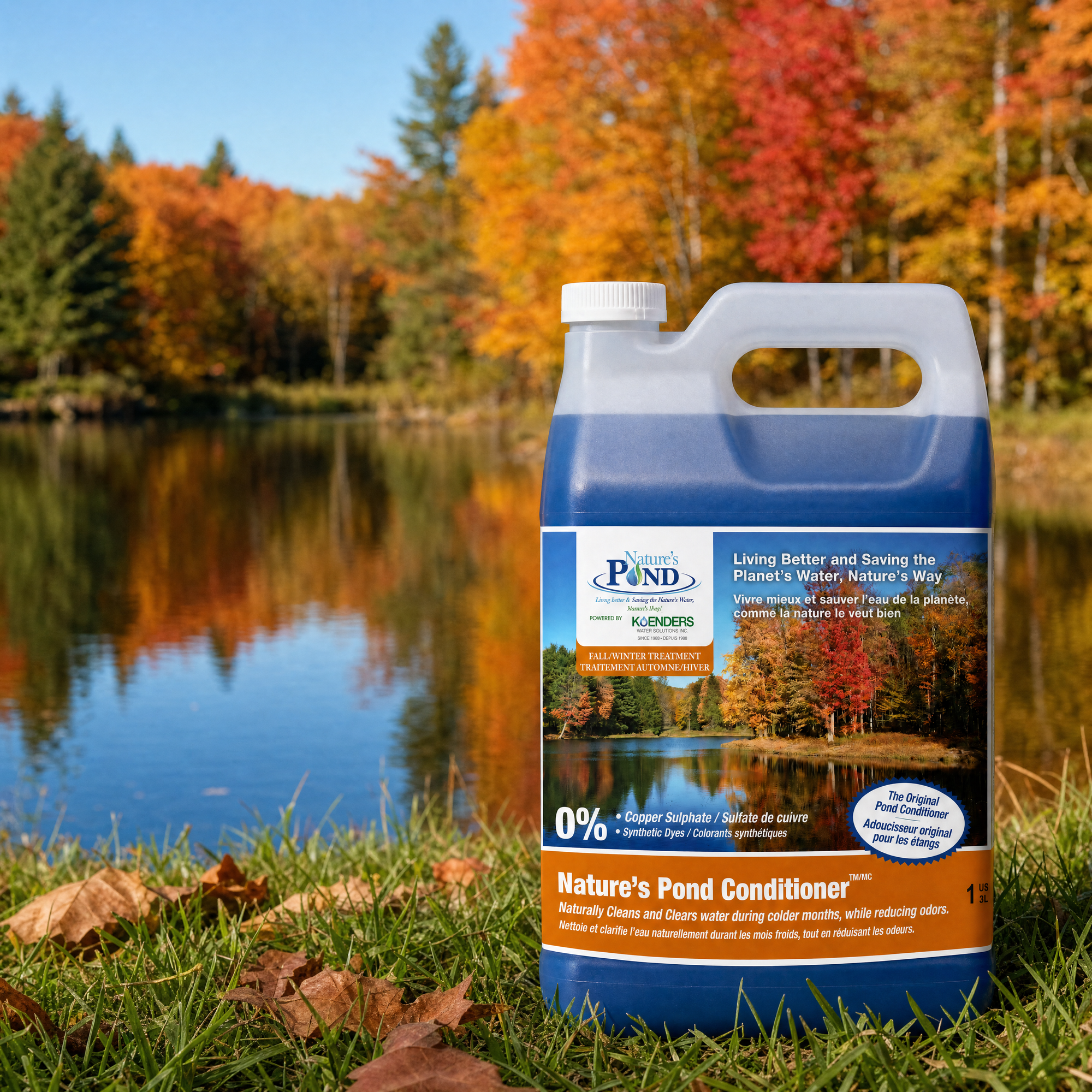
Beneficial-bacteria and natural water-care products may be useful adjuncts when chosen for the issue at hand and applied according to label directions. They can support the breakdown of organic matter and nutrient cycling over time. They are not a substitute for water testing, regulatory requirements, or investigation of a suspected harmful bloom, chemical contamination, or disease concern.
When to test and when to seek advice
Testing establishes a baseline and helps distinguish a routine seasonal change from a water-quality concern. Consider testing before beginning a new irrigation season, after a significant runoff event, when livestock behaviour changes around the water source, or when colour, odour, foam, or clarity changes persist. The right test panel depends on intended use and local guidance.
If you observe a dense blue-green, pea-soup-like, or paint-like surface accumulation, keep people and animals away from the water until qualified local guidance is obtained. Do not rely on appearance alone to identify a bloom. Aeration may be part of the long-term management plan, but a suspected harmful algal bloom requires a site-specific response.
A better long-term standard for dugout care
The best time to manage dugout water quality is before water becomes visibly stressed. A properly designed aeration system, operated consistently and supported by runoff control and regular observation, can help create better conditions across the seasons. For farms and ranches, that means a more dependable water resource and a clearer plan for protecting it.
Think of dugout aeration as preventive infrastructure: it supports the water body every day, rather than waiting for a visible problem to become a costly one.
Related
- Pond Aerator Calculator Start sizing an aeration approach using your water body's basic dimensions.
- Farm and Ranch Water Solutions Explore practical water-management solutions for working farms and ranches.
- Pond Care Program Build a long-term plan for aeration, natural care, and seasonal observation.
- Water Care Learning Centre Find more expert guidance on pond, dugout, and lake water care.
FAQ